

Many business owners are accustomed to running the whole show. But as your company grows, you’ll likely be better off sharing responsibility for major decisions. Whether you’ve recruited experienced managers or developed “home grown” talent, you can empower these employees by taking a more collaborative approach to management.
Author: Elana Korn (page 11)
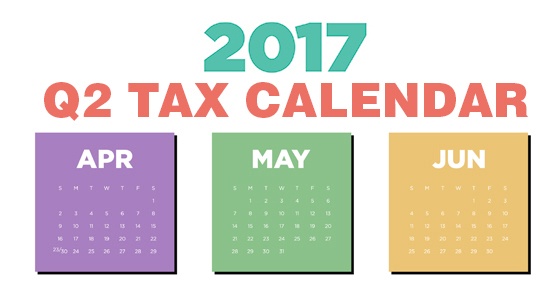
2017 Q2 tax calendar: Key deadlines for businesses and other employers
Here are some of the key tax-related deadlines affecting businesses and other employers during the second quarter of 2017. Keep in mind that this list isn’t all-inclusive, so there may be additional deadlines that apply to you. Contact us to ensure you’re meeting all applicable deadlines and to learn more about the filing requirements.
2016 IRA contributions — it’s not too late!
Yes, there’s still time to make 2016 contributions to your IRA. The deadline for such contributions is April 18, 2017. If the contribution is deductible, it will lower your 2016 tax bill. But even if it isn’t, making a 2016 contribution is likely a good idea.
Victims of a disaster, fire or theft may be able to claim a casualty loss deduction
If you suffered damage to your home or personal property last year, you may be able to deduct these “casualty” losses on your 2016 federal income tax return. A casualty is a sudden, unexpected or unusual event, such as a natural disaster (hurricane, tornado, flood, earthquake, etc.), fire, accident, theft or vandalism. A casualty loss doesn’t include losses from normal wear and tear or progressive deterioration from age or termite damage.
The Section 1031 exchange: Why it’s such a great tax planning tool
Like many business owners, you might also own highly appreciated business or investment real estate. Fortunately, there’s an effective tax planning strategy at your disposal: the Section 1031 “like kind” exchange. It can help you defer capital gains tax on appreciated property indefinitely.
When an elderly parent might qualify as your dependent
It’s not uncommon for adult children to help support their aging parents. If you’re in this position, you might qualify for the adult-dependent exemption. It allows eligible taxpayers to deduct up to $4,050 for each adult dependent claimed on their 2016 tax return.
What can a valuation expert do for your succession plan?
Most business owners spend a lifetime building their business. And when it comes to succession, they face the difficult decision of whether to sell, dissolve or transfer the business to family members (or a nonfamily successor).
Tangible property safe harbors help maximize deductions
If last year your business made repairs to tangible property, such as buildings, machinery, equipment or vehicles, you may be eligible for a valuable deduction on your 2016 income tax return. But you must make sure they were truly “repairs,” and not actually “improvements.”
When it comes to charitable deductions, all donations aren’t created equal
As you file your 2016 income tax return and plan your charitable giving for 2017, it’s important to keep in mind the available deduction. It can vary significantly depending on a variety of factors.
An EAP can keep your top players on the floor
A good basketball team is at its best when its top players are on the floor. Similarly, a company is the most productive, efficient and innovative when its best employees are in the right positions, doing great work.