 Income tax generally applies to all forms of income, including cancellation-of-debt (COD) income. Think of it this way: If a creditor forgives a debt, you avoid the expense of making the payments, which increases your net income.


Income tax generally applies to all forms of income, including cancellation-of-debt (COD) income. Think of it this way: If a creditor forgives a debt, you avoid the expense of making the payments, which increases your net income.

 If you have incomplete or missing records and get audited by the IRS, your business will likely lose out on valuable deductions. Here are two recent U.S. Tax Court cases that help illustrate the rules for documenting deductions.

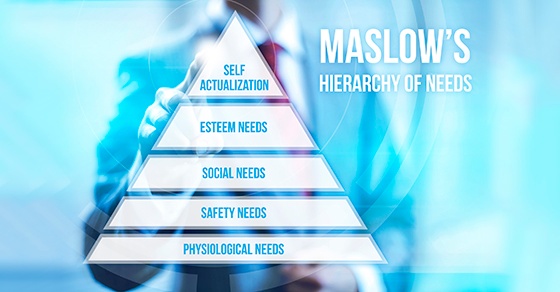 In 1943, psychologist Abraham Maslow set out his “hierarchy of needs.” This theory suggested that human behavior is a response to a variety of needs ranging from physical survival to self-actualization.

 Has your small business procrastinated in setting up a retirement plan? You might want to take a look at a SIMPLE IRA. SIMPLE stands for “savings incentive match plan for employees.” If you decide you’re interested in a SIMPLE IRA, you must establish it by no later than October 1 of the year for which you want to make your initial deductible contribution. (If you’re a new employer and come into existence after October 1, you can establish the SIMPLE IRA as soon as administratively feasible.)

 Would you drive a car without a functional dashboard? Perhaps once a month someone could tell you how fast you were going and how much fuel you had left. Sound good? Probably not. Yet this is how many business owners run their companies.

 If you recently redeemed frequent flyer miles to treat the family to a fun summer vacation or to take your spouse on a romantic getaway, you might assume that there are no tax implications involved. And you’re probably right — but there is a chance your miles could be taxable.

 The prospect of leaving your company in the hands of someone else likely brings mixed emotions. You’ve no doubt spent a substantial amount of time and a great degree of effort in getting your enterprise to where it is today. So, as the saying goes, parting will be such sweet sorrow.

 If you run your business as an S corporation, you’re probably both a shareholder and an employee. As such, the corporation pays you a salary that reflects the work you do for the business — and you (and your company) must remit payroll tax on some or all of your wages.

 Many expenses that may qualify as miscellaneous itemized deductions are deductible only to the extent they exceed, in aggregate, 2% of your adjusted gross income (AGI). Bunching these expenses into a single year may allow you to exceed this “floor.” So now is a good time to add up your potential deductions to date to see if bunching is a smart strategy for you this year.

 Many businesses use independent contractors to keep payroll taxes and fringe benefit costs down. But using outside workers may result in other problems. The IRS often questions businesses about whether workers should be classified as employees or independent contractors for federal employment tax purposes.